


Pope Benedict's message for WYD Rio 2013
Salt + Light Media
Saturday, November 17, 2012

Dear young friends,
I greet all of you with great joy and affection. I am sure that many of you returned from World Youth Day in Madrid all the more “planted and built up in Jesus Christ, firm in the faith” (cf. Col 2:7). This year in our Dioceses we celebrated the joy of being Christians, taking as our theme: “Rejoice in the Lord always” (Phil 4:4). And now we are preparing for the next World Youth Day, which will take place in Rio de Janeiro, Brazil, in July 2013.
Before all else, I invite you once more to take part in this important event. The celebrated statue of Christ the Redeemer overlooking that beautiful Brazilian city will be an eloquent symbol for us. Christ’s open arms are a sign of his willingness to embrace all those who come to him, and his heart represents his immense love for everyone and for each of you. Let yourselves be drawn to Christ! Experience this encounter along with all the other young people who will converge on Rio for the next World Youth Day! Accept Christ’s love and you will be the witnesses so needed by our world.  I invite you to prepare for World Youth Day in Rio de Janeiro by meditating even now on the theme of the meeting: “Go and make disciples of all nations!” (cf. Mt 28:19). This is the great missionary mandate that Christ gave the whole Church, and today, two thousand years later, it remains as urgent as ever. This mandate should resound powerfully in your hearts. The year of preparation for the gathering in Rio coincides with the Year of Faith, which began with the Synod of Bishops devoted to “The New Evangelization for the Transmission of the Christian Faith”. I am happy that you too, dear young people, are involved in this missionary outreach on the part of the whole Church. To make Christ known is the most precious gift that you can give to others.
A pressing call
History shows how many young people, by their generous gift of self, made a great contribution to the Kingdom of God and the development of this world by proclaiming the Gospel. Filled with enthusiasm, they brought the Good News of God’s Love made manifest in Christ; they used the means and possibilities then available, which were far inferior to those we have today. One example which comes to mind is Blessed José de Anchieta. He was a young Spanish Jesuit of the sixteenth century who went as a missionary to Brazil before he was twenty years old and became a great apostle of the New World. But I also think of those among yourselves who are generously devoted to the Church’s mission. I saw a wonderful testimony of this at World Youth Day in Madrid, particularly at the meeting with volunteers.
Many young people today seriously question whether life is something good, and have a hard time finding their way. More generally, however, young people look at the difficulties of our world and ask themselves: is there anything I can do? The light of faith illumines this darkness. It helps us to understand that every human life is priceless because each of us is the fruit of God’s love. God loves everyone, even those who have fallen away from him or disregard him. God waits patiently. Indeed, God gave his Son to die and rise again in order to free us radically from evil. Christ sent his disciples forth to bring this joyful message of salvation and new life to all people everywhere.
The Church, in continuing this mission of evangelization, is also counting on you. Dear young people, you are the first missionaries among your contemporaries! At the end of the Second Vatican Council – whose fiftieth anniversary we are celebrating this year – the Servant of God Paul VI consigned a message to the youth of the world. It began: “It is to you, young men and women of the world, that the Council wishes to address its final message. For it is you who are to receive the torch from the hands of your elders and to live in the world at the period of the most massive transformations ever realized in its history. It is you who, taking up the best of the example and the teaching of your parents and your teachers, will shape the society of tomorrow. You will either be saved or perish with it”. It concluded with the words: “Build with enthusiasm a better world than what we have today!” (Message to Young People, 8 December 1965).
Dear friends, this invitation remains timely. We are passing through a very particular period of history. Technical advances have given us unprecedented possibilities for interaction between people and nations. But the globalization of these relationships will be positive and help the world to grow in humanity only if it is founded on love rather than on materialism. Love is the only thing that can fill hearts and bring people together. God is love. When we forget God, we lose hope and become unable to love others. That is why it is so necessary to testify to God’s presence so that others can experience it. The salvation of humanity depends on this, as well as the salvation of each of us. Anyone who understands this can only exclaim with Saint Paul: “Woe to me if I do not preach the gospel!” (1 Cor 9:16).
I invite you to prepare for World Youth Day in Rio de Janeiro by meditating even now on the theme of the meeting: “Go and make disciples of all nations!” (cf. Mt 28:19). This is the great missionary mandate that Christ gave the whole Church, and today, two thousand years later, it remains as urgent as ever. This mandate should resound powerfully in your hearts. The year of preparation for the gathering in Rio coincides with the Year of Faith, which began with the Synod of Bishops devoted to “The New Evangelization for the Transmission of the Christian Faith”. I am happy that you too, dear young people, are involved in this missionary outreach on the part of the whole Church. To make Christ known is the most precious gift that you can give to others.
A pressing call
History shows how many young people, by their generous gift of self, made a great contribution to the Kingdom of God and the development of this world by proclaiming the Gospel. Filled with enthusiasm, they brought the Good News of God’s Love made manifest in Christ; they used the means and possibilities then available, which were far inferior to those we have today. One example which comes to mind is Blessed José de Anchieta. He was a young Spanish Jesuit of the sixteenth century who went as a missionary to Brazil before he was twenty years old and became a great apostle of the New World. But I also think of those among yourselves who are generously devoted to the Church’s mission. I saw a wonderful testimony of this at World Youth Day in Madrid, particularly at the meeting with volunteers.
Many young people today seriously question whether life is something good, and have a hard time finding their way. More generally, however, young people look at the difficulties of our world and ask themselves: is there anything I can do? The light of faith illumines this darkness. It helps us to understand that every human life is priceless because each of us is the fruit of God’s love. God loves everyone, even those who have fallen away from him or disregard him. God waits patiently. Indeed, God gave his Son to die and rise again in order to free us radically from evil. Christ sent his disciples forth to bring this joyful message of salvation and new life to all people everywhere.
The Church, in continuing this mission of evangelization, is also counting on you. Dear young people, you are the first missionaries among your contemporaries! At the end of the Second Vatican Council – whose fiftieth anniversary we are celebrating this year – the Servant of God Paul VI consigned a message to the youth of the world. It began: “It is to you, young men and women of the world, that the Council wishes to address its final message. For it is you who are to receive the torch from the hands of your elders and to live in the world at the period of the most massive transformations ever realized in its history. It is you who, taking up the best of the example and the teaching of your parents and your teachers, will shape the society of tomorrow. You will either be saved or perish with it”. It concluded with the words: “Build with enthusiasm a better world than what we have today!” (Message to Young People, 8 December 1965).
Dear friends, this invitation remains timely. We are passing through a very particular period of history. Technical advances have given us unprecedented possibilities for interaction between people and nations. But the globalization of these relationships will be positive and help the world to grow in humanity only if it is founded on love rather than on materialism. Love is the only thing that can fill hearts and bring people together. God is love. When we forget God, we lose hope and become unable to love others. That is why it is so necessary to testify to God’s presence so that others can experience it. The salvation of humanity depends on this, as well as the salvation of each of us. Anyone who understands this can only exclaim with Saint Paul: “Woe to me if I do not preach the gospel!” (1 Cor 9:16).  Become Christ’s disciples
This missionary vocation comes to you for another reason as well, and that is because it is necessary for our personal journey in faith. Blessed John Paul II wrote that “faith is strengthened when it is given to others!” (Redemptoris Missio, 2). When you proclaim the Gospel, you yourselves grow as you become more deeply rooted in Christ and mature as Christians. Missionary commitment is an essential dimension of faith. We cannot be true believers if we do not evangelize. The proclamation of the Gospel can only be the result of the joy that comes from meeting Christ and finding in him the rock on which our lives can be built. When you work to help others and proclaim the Gospel to them, then your own lives, so often fragmented because of your many activities, will find their unity in the Lord. You will also build up your own selves, and you will grow and mature in humanity.
What does it mean to be a missionary? Above all, it means being a disciple of Christ. It means listening ever anew to the invitation to follow him and look to him: “Learn from me, for I am gentle and humble in heart” (Mt 11:29). A disciple is a person attentive to Jesus’ word (cf. Lk 10:39), someone who acknowledges that Jesus is the Teacher who has loved us so much that he gave his life for us. Each one of you, therefore, should let yourself be shaped by God’s word every day. This will make you friends of the Lord Jesus and enable you to lead other young people to friendship with him.
I encourage you to think of the gifts you have received from God so that you can pass them on to others in turn. Learn to reread your personal history. Be conscious of the wonderful legacy passed down to you from previous generations. So many faith-filled people have been courageous in handing down the faith in the face of trials and incomprehension. Let us never forget that we are links in a great chain of men and women who have transmitted the truth of the faith and who depend on us to pass it on to others. Being a missionary presupposes knowledge of this legacy, which is the faith of the Church. It is necessary to know what you believe in, so that you can proclaim it. As I wrote in the introduction to the YouCat, the catechism for young people that I gave you at World Youth Day in Madrid, “you need to know your faith with that same precision with which an IT specialist knows the inner workings of a computer. You need to understand it like a good musician knows the piece he is playing. Yes, you need to be more deeply rooted in the faith than the generation of your parents so that you can engage the challenges and temptations of this time with strength and determination” (Foreward).
Go forth!
Jesus sent his disciples forth on mission with this command: “Go into all the world and proclaim the good news to the whole creation. The one who believes and is baptized will be saved” (Mk 16:15-16). To evangelize means to bring the Good News of salvation to others and to let them know that this Good News is a person: Jesus Christ. When I meet him, when I discover how much I am loved by God and saved by God, I begin to feel not only the desire, but also the need to make God known to others. At the beginning of John’s Gospel we see how Andrew, immediately after he met Jesus, ran off to fetch his brother Simon (cf. 1:40-42). Evangelization always begins with an encounter with the Lord Jesus. Those who come to Jesus and have experienced his love, immediately want to share the beauty of the meeting and the joy born of his friendship. The more we know Christ, the more we want to talk about him. The more we speak with Christ, the more we want to speak about him. The more we are won over by Christ, the more we want to draw others to him.
Through Baptism, which brings us to new life, the Holy Spirit abides in us and inflames our minds and hearts. The Spirit shows us how to know God and to enter into ever deeper friendship with Christ. It is the Spirit who encourages us to do good, to serve others and to give of ourselves. Through Confirmation we are strengthened by the gifts of the Spirit so that we can bear witness to the Gospel in an increasingly mature way. It is the Spirit of love, therefore, who is the driving force behind our mission. The Spirit impels us to go out from ourselves and to “go forth” to evangelize. Dear young people, allow yourselves to be led on by the power of God’s love. Let that love overcome the tendency to remain enclosed in your own world with your own problems and your own habits. Have the courage to “go out” from yourselves in order to “go forth” towards others and to show them the way to an encounter with God.
Gather all nations
The risen Christ sent his disciples forth to bear witness to his saving presence before all the nations, because God in his superabundant love wants everyone to be saved and no one to be lost. By his loving sacrifice on the cross, Jesus opened up the way for every man and woman to come to know God and enter into a communion of love with him. He formed a community of disciples to bring the saving message of the Gospel to the ends of the earth and to reach men and women in every time and place. Let us make God’s desire our own!
Dear friends, open your eyes and look around you. So many young people no longer see any meaning in their lives. Go forth! Christ needs you too. Let yourselves be caught up and drawn along by his love. Be at the service of this immense love, so it can reach out to everyone, especially to those “far away”. Some people are far away geographically, but others are far away because their way of life has no place for God. Some people have not yet personally received the Gospel, while others have been given it, but live as if God did not exist. Let us open our hearts to everyone. Let us enter into conversation in simplicity and respect. If this conversation is held in true friendship, it will bear fruit. The “nations” that we are invited to reach out to are not only other countries in the world. They are also the different areas of our lives, such as our families, communities, places of study and work, groups of friends and places where we spend our free time. The joyful proclamation of the Gospel is meant for all the areas of our lives, without exception.
Become Christ’s disciples
This missionary vocation comes to you for another reason as well, and that is because it is necessary for our personal journey in faith. Blessed John Paul II wrote that “faith is strengthened when it is given to others!” (Redemptoris Missio, 2). When you proclaim the Gospel, you yourselves grow as you become more deeply rooted in Christ and mature as Christians. Missionary commitment is an essential dimension of faith. We cannot be true believers if we do not evangelize. The proclamation of the Gospel can only be the result of the joy that comes from meeting Christ and finding in him the rock on which our lives can be built. When you work to help others and proclaim the Gospel to them, then your own lives, so often fragmented because of your many activities, will find their unity in the Lord. You will also build up your own selves, and you will grow and mature in humanity.
What does it mean to be a missionary? Above all, it means being a disciple of Christ. It means listening ever anew to the invitation to follow him and look to him: “Learn from me, for I am gentle and humble in heart” (Mt 11:29). A disciple is a person attentive to Jesus’ word (cf. Lk 10:39), someone who acknowledges that Jesus is the Teacher who has loved us so much that he gave his life for us. Each one of you, therefore, should let yourself be shaped by God’s word every day. This will make you friends of the Lord Jesus and enable you to lead other young people to friendship with him.
I encourage you to think of the gifts you have received from God so that you can pass them on to others in turn. Learn to reread your personal history. Be conscious of the wonderful legacy passed down to you from previous generations. So many faith-filled people have been courageous in handing down the faith in the face of trials and incomprehension. Let us never forget that we are links in a great chain of men and women who have transmitted the truth of the faith and who depend on us to pass it on to others. Being a missionary presupposes knowledge of this legacy, which is the faith of the Church. It is necessary to know what you believe in, so that you can proclaim it. As I wrote in the introduction to the YouCat, the catechism for young people that I gave you at World Youth Day in Madrid, “you need to know your faith with that same precision with which an IT specialist knows the inner workings of a computer. You need to understand it like a good musician knows the piece he is playing. Yes, you need to be more deeply rooted in the faith than the generation of your parents so that you can engage the challenges and temptations of this time with strength and determination” (Foreward).
Go forth!
Jesus sent his disciples forth on mission with this command: “Go into all the world and proclaim the good news to the whole creation. The one who believes and is baptized will be saved” (Mk 16:15-16). To evangelize means to bring the Good News of salvation to others and to let them know that this Good News is a person: Jesus Christ. When I meet him, when I discover how much I am loved by God and saved by God, I begin to feel not only the desire, but also the need to make God known to others. At the beginning of John’s Gospel we see how Andrew, immediately after he met Jesus, ran off to fetch his brother Simon (cf. 1:40-42). Evangelization always begins with an encounter with the Lord Jesus. Those who come to Jesus and have experienced his love, immediately want to share the beauty of the meeting and the joy born of his friendship. The more we know Christ, the more we want to talk about him. The more we speak with Christ, the more we want to speak about him. The more we are won over by Christ, the more we want to draw others to him.
Through Baptism, which brings us to new life, the Holy Spirit abides in us and inflames our minds and hearts. The Spirit shows us how to know God and to enter into ever deeper friendship with Christ. It is the Spirit who encourages us to do good, to serve others and to give of ourselves. Through Confirmation we are strengthened by the gifts of the Spirit so that we can bear witness to the Gospel in an increasingly mature way. It is the Spirit of love, therefore, who is the driving force behind our mission. The Spirit impels us to go out from ourselves and to “go forth” to evangelize. Dear young people, allow yourselves to be led on by the power of God’s love. Let that love overcome the tendency to remain enclosed in your own world with your own problems and your own habits. Have the courage to “go out” from yourselves in order to “go forth” towards others and to show them the way to an encounter with God.
Gather all nations
The risen Christ sent his disciples forth to bear witness to his saving presence before all the nations, because God in his superabundant love wants everyone to be saved and no one to be lost. By his loving sacrifice on the cross, Jesus opened up the way for every man and woman to come to know God and enter into a communion of love with him. He formed a community of disciples to bring the saving message of the Gospel to the ends of the earth and to reach men and women in every time and place. Let us make God’s desire our own!
Dear friends, open your eyes and look around you. So many young people no longer see any meaning in their lives. Go forth! Christ needs you too. Let yourselves be caught up and drawn along by his love. Be at the service of this immense love, so it can reach out to everyone, especially to those “far away”. Some people are far away geographically, but others are far away because their way of life has no place for God. Some people have not yet personally received the Gospel, while others have been given it, but live as if God did not exist. Let us open our hearts to everyone. Let us enter into conversation in simplicity and respect. If this conversation is held in true friendship, it will bear fruit. The “nations” that we are invited to reach out to are not only other countries in the world. They are also the different areas of our lives, such as our families, communities, places of study and work, groups of friends and places where we spend our free time. The joyful proclamation of the Gospel is meant for all the areas of our lives, without exception.
 I would like to emphasize two areas where your missionary commitment is all the more necessary. Dear young people, the first is the field of social communications, particularly the world of the internet. As I mentioned to you on another occasion: “I ask you to introduce into the culture of this new environment of communications and information technology the values on which you have built your lives. [...] It falls, in particular, to young people, who have an almost spontaneous affinity for the new means of communication, to take on the responsibility for the evangelization of this ‘digital continent’” (Message for the 43rd World Communications Day, 24 May 2009). Learn how to use these media wisely. Be aware of the hidden dangers they contain, especially the risk of addiction, of confusing the real world with the virtual, and of replacing direct and personal encounters and dialogue with internet contacts.
The second area is that of travel and migration. Nowadays more and more young people travel, sometimes for their studies or work, and at other times for pleasure. I am also thinking of the movements of migration which involve millions of people, very often young, who go to other regions or countries for financial or social reasons. Here too we can find providential opportunities for sharing the Gospel. Dear young people, do not be afraid to witness to your faith in these settings. It is a precious gift for those you meet when you communicate the joy of an encounter with Christ.
Make disciples!
I imagine that you have at times found it difficult to invite your contemporaries to an experience of faith. You have seen how many young people, especially at certain points in their life journey, desire to know Christ and to live the values of the Gospel, but also feel inadequate and incapable. What can we do? First, your closeness and your witness will themselves be a way in which God can touch their hearts. Proclaiming Christ is not only a matter of words, but something which involves one’s whole life and translates into signs of love. It is the love that Christ has poured into our hearts which makes us evangelizers. Consequently, our love must become more and more like Christ’s own love. We should always be prepared, like the Good Samaritan, to be attentive to those we meet, to listen, to be understanding and to help. In this way we can lead those who are searching for the truth and for meaning in life to God’s house, the Church, where hope and salvation abide (cf. Lk 10:29-37). Dear friends, never forget that the first act of love that you can do for others is to share the source of our hope. If we do not give them God, we give them too little! Jesus commanded his Apostles: “Go and make disciples of all nations, baptizing them in the name of the Father and of the Son and of the Holy Spirit, and teaching them to obey everything I have commanded you.” (Mt 28:19-20). The main way that we have to “make disciples” is through Baptism and catechesis. This means leading the people we are evangelizing to encounter the living Christ above all in his word and in the sacraments. In this way they can believe in him, they can come to know God and to live in his grace. I would like each of you to ask yourself: Have I ever had the courage to propose Baptism to young people who have not received it? Have I ever invited anyone to embark on a journey of discovery of the Christian faith? Dear friends, do not be afraid to suggest an encounter with Christ to people of your own age. Ask the Holy Spirit for help. The Spirit will show you the way to know and love Christ even more fully, and to be creative in spreading the Gospel.
Firm in the faith
When faced with difficulties in the mission of evangelizing, perhaps you will be tempted to say, like the prophet Jeremiah: “Ah, Lord God! Behold, I do not know how to speak, for I am only a youth”. But God will say to you too: “Do not say, ‘I am only a youth’; for to all to whom I send you you shall go” (Jer 1:6-7). Whenever you feel inadequate, incapable and weak in proclaiming and witnessing to the faith, do not be afraid. Evangelization is not our initiative, and it does not depend on our talents. It is a faithful and obedient response to God’s call and so it is not based on our power but on God’s. Saint Paul knew this from experience: “But we have this treasure in earthen vessels, to show that the transcendent power belongs to God and not to us” (2 Cor 4:7).
For this reason, I encourage you to make prayer and the sacraments your foundation. Authentic evangelization is born of prayer and sustained by prayer.
I would like to emphasize two areas where your missionary commitment is all the more necessary. Dear young people, the first is the field of social communications, particularly the world of the internet. As I mentioned to you on another occasion: “I ask you to introduce into the culture of this new environment of communications and information technology the values on which you have built your lives. [...] It falls, in particular, to young people, who have an almost spontaneous affinity for the new means of communication, to take on the responsibility for the evangelization of this ‘digital continent’” (Message for the 43rd World Communications Day, 24 May 2009). Learn how to use these media wisely. Be aware of the hidden dangers they contain, especially the risk of addiction, of confusing the real world with the virtual, and of replacing direct and personal encounters and dialogue with internet contacts.
The second area is that of travel and migration. Nowadays more and more young people travel, sometimes for their studies or work, and at other times for pleasure. I am also thinking of the movements of migration which involve millions of people, very often young, who go to other regions or countries for financial or social reasons. Here too we can find providential opportunities for sharing the Gospel. Dear young people, do not be afraid to witness to your faith in these settings. It is a precious gift for those you meet when you communicate the joy of an encounter with Christ.
Make disciples!
I imagine that you have at times found it difficult to invite your contemporaries to an experience of faith. You have seen how many young people, especially at certain points in their life journey, desire to know Christ and to live the values of the Gospel, but also feel inadequate and incapable. What can we do? First, your closeness and your witness will themselves be a way in which God can touch their hearts. Proclaiming Christ is not only a matter of words, but something which involves one’s whole life and translates into signs of love. It is the love that Christ has poured into our hearts which makes us evangelizers. Consequently, our love must become more and more like Christ’s own love. We should always be prepared, like the Good Samaritan, to be attentive to those we meet, to listen, to be understanding and to help. In this way we can lead those who are searching for the truth and for meaning in life to God’s house, the Church, where hope and salvation abide (cf. Lk 10:29-37). Dear friends, never forget that the first act of love that you can do for others is to share the source of our hope. If we do not give them God, we give them too little! Jesus commanded his Apostles: “Go and make disciples of all nations, baptizing them in the name of the Father and of the Son and of the Holy Spirit, and teaching them to obey everything I have commanded you.” (Mt 28:19-20). The main way that we have to “make disciples” is through Baptism and catechesis. This means leading the people we are evangelizing to encounter the living Christ above all in his word and in the sacraments. In this way they can believe in him, they can come to know God and to live in his grace. I would like each of you to ask yourself: Have I ever had the courage to propose Baptism to young people who have not received it? Have I ever invited anyone to embark on a journey of discovery of the Christian faith? Dear friends, do not be afraid to suggest an encounter with Christ to people of your own age. Ask the Holy Spirit for help. The Spirit will show you the way to know and love Christ even more fully, and to be creative in spreading the Gospel.
Firm in the faith
When faced with difficulties in the mission of evangelizing, perhaps you will be tempted to say, like the prophet Jeremiah: “Ah, Lord God! Behold, I do not know how to speak, for I am only a youth”. But God will say to you too: “Do not say, ‘I am only a youth’; for to all to whom I send you you shall go” (Jer 1:6-7). Whenever you feel inadequate, incapable and weak in proclaiming and witnessing to the faith, do not be afraid. Evangelization is not our initiative, and it does not depend on our talents. It is a faithful and obedient response to God’s call and so it is not based on our power but on God’s. Saint Paul knew this from experience: “But we have this treasure in earthen vessels, to show that the transcendent power belongs to God and not to us” (2 Cor 4:7).
For this reason, I encourage you to make prayer and the sacraments your foundation. Authentic evangelization is born of prayer and sustained by prayer. 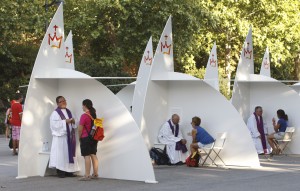 We must first speak with God in order to be able to speak about God. In prayer, we entrust to the Lord the people to whom we have been sent, asking him to touch their hearts. We ask the Holy Spirit to make us his instruments for their salvation. We ask Christ to put his words on our lips and to make us signs of his love. In a more general way, we pray for the mission of the whole Church, as Jesus explicitly asked us: “Pray therefore the Lord of the harvest to send out labourers into his harvest” (Mt 9:38). Find in the Eucharist the wellspring of your life of faith and Christian witness, regularly attending Mass each Sunday and whenever you can during the week. Approach the sacrament of Reconciliation frequently. It is a very special encounter with God’s mercy in which he welcomes us, forgives us and renews our hearts in charity. Make an effort to receive the Sacrament of Confirmation if you have not already done so, and prepare yourselves for it with care and commitment. Confirmation is, like the Eucharist, a sacrament of mission, for it gives us the strength and love of the Holy Spirit to profess fearlessly our faith. I also encourage you to practise Eucharistic adoration. Time spent in listening and talking with Jesus present in the Blessed Sacrament becomes a source of new missionary enthusiasm.
If you follow this path, Christ himself will give you the ability to be completely faithful to his word and to bear faithful and courageous witness to him. At times you will be called to give proof of your perseverance, particularly when the word of God is met with rejection or opposition. In certain areas of the world, some of you suffer from the fact that you cannot bear public witness to your faith in Christ due to the lack of religious freedom. Some have already paid with their lives the price of belonging to the Church. I ask you to remain firm in the faith, confident that Christ is at your side in every trial. To you too he says: “Blessed are you when people revile you and persecute you and utter all kinds of evil against you on my account. Rejoice and be glad, for your reward is great in heaven” (Mt 5:11-12).
With the whole Church
Dear young people, if you are to remain firm in professing the Christian faith wherever you are sent, you need the Church. No one can bear witness to the Gospel alone. Jesus sent forth his disciples on mission together. He spoke to them in the plural when he said: “Make disciples”. Our witness is always given as members of the Christian community, and our mission is made fruitful by the communion lived in the Church. It is by our unity and love for one another that others will recognize us as Christ’s disciples (cf. Jn 13:35). I thank God for the wonderful work of evangelization being carried out by our Christian communities, our parishes and our ecclesial movements. The fruits of this evangelization belong to the whole Church. As Jesus said: “One sows and another reaps” (Jn 4:37).
Here I cannot fail to express my gratitude for the great gift of missionaries, who devote themselves completely to proclaiming the Gospel to the ends of the earth. I also thank the Lord for priests and consecrated persons, who give themselves totally so that Jesus Christ will be proclaimed and loved. Here I would like to encourage young people who are called by God to commit themselves with enthusiasm to these vocations: “It is more blessed to give than to receive” (Acts 20:35). To those who leave everything to follow him, Jesus promised a hundredfold as much and eternal life besides (cf. Mt 19:29).
I also give thanks for all those lay men and women who do their best to live their daily lives as mission wherever they find themselves, at home or at work, so that Christ will be loved and served and that the Kingdom of God will grow. I think especially of all those who work in the fields of education, health care, business, politics and finance, and in the many other areas of the lay apostolate. Christ needs your commitment and your witness. Let nothing – whether difficulties or lack of understanding – discourage you from bringing the Gospel of Christ wherever you find yourselves. Each of you is a precious piece in the great mosaic of evangelization!
“Here I am, Lord!”
Finally, dear young people, I would ask all of you to hear, in the depths of your heart, Jesus’ call to proclaim his Gospel. As the great statue of Christ the Redeemer in Rio de Janeiro shows, his heart is open with love for each and every person, and his arms are open wide to reach out to everyone. Be yourselves the heart and arms of Jesus! Go forth and bear witness to his love! Be a new generation of missionaries, impelled by love and openness to all! Follow the example of the Church’s great missionaries like Saint Francis Xavier and so many others.
At the conclusion of World Youth Day in Madrid, I blessed a number of young people from the different continents who were going forth on mission. They represented all those young people who, echoing the words of the prophet Isaiah, have said to the Lord: “Here I am. Send me!” (Is 6:8). The Church has confidence in you and she thanks you for the joy and energy that you contribute. Generously put your talents to use in the service of the proclamation of the Gospel! We know that the Holy Spirit is granted to those who open their hearts to this proclamation. And do not be afraid: Jesus, the Saviour of the world, is with us every day until the end of time (cf. Mt 28:20).
This call, which I make to the youth of the whole world, has a particular resonance for you, dear young people of Latin America! During the Fifth General Conference of the Latin American Bishops, in Aparecida in 2007, the Bishops launched a “continental mission”. Young people form a majority of the population in South America and they are an important and precious resource for the Church and society. Be in the first line of missionaries! Now that World Youth Day is coming back to Latin America, I ask you, the young people on the continent, to transmit the enthusiasm of your faith to your contemporaries from all over the world!
May Our Lady, Star of the New Evangelization, whom we also invoke under the titles of Our Lady of Aparecida and Our Lady of Guadalupe, accompany each of you in your mission as a witness to God’s love. To all of you, with particular affection, I impart my Apostolic Blessing.
From the Vatican, 18 October 2012
BENEDICTUS PP XVI
---
Photos courtesy of CNS
Christ the Redeemer photo courtesy of Artemix
We must first speak with God in order to be able to speak about God. In prayer, we entrust to the Lord the people to whom we have been sent, asking him to touch their hearts. We ask the Holy Spirit to make us his instruments for their salvation. We ask Christ to put his words on our lips and to make us signs of his love. In a more general way, we pray for the mission of the whole Church, as Jesus explicitly asked us: “Pray therefore the Lord of the harvest to send out labourers into his harvest” (Mt 9:38). Find in the Eucharist the wellspring of your life of faith and Christian witness, regularly attending Mass each Sunday and whenever you can during the week. Approach the sacrament of Reconciliation frequently. It is a very special encounter with God’s mercy in which he welcomes us, forgives us and renews our hearts in charity. Make an effort to receive the Sacrament of Confirmation if you have not already done so, and prepare yourselves for it with care and commitment. Confirmation is, like the Eucharist, a sacrament of mission, for it gives us the strength and love of the Holy Spirit to profess fearlessly our faith. I also encourage you to practise Eucharistic adoration. Time spent in listening and talking with Jesus present in the Blessed Sacrament becomes a source of new missionary enthusiasm.
If you follow this path, Christ himself will give you the ability to be completely faithful to his word and to bear faithful and courageous witness to him. At times you will be called to give proof of your perseverance, particularly when the word of God is met with rejection or opposition. In certain areas of the world, some of you suffer from the fact that you cannot bear public witness to your faith in Christ due to the lack of religious freedom. Some have already paid with their lives the price of belonging to the Church. I ask you to remain firm in the faith, confident that Christ is at your side in every trial. To you too he says: “Blessed are you when people revile you and persecute you and utter all kinds of evil against you on my account. Rejoice and be glad, for your reward is great in heaven” (Mt 5:11-12).
With the whole Church
Dear young people, if you are to remain firm in professing the Christian faith wherever you are sent, you need the Church. No one can bear witness to the Gospel alone. Jesus sent forth his disciples on mission together. He spoke to them in the plural when he said: “Make disciples”. Our witness is always given as members of the Christian community, and our mission is made fruitful by the communion lived in the Church. It is by our unity and love for one another that others will recognize us as Christ’s disciples (cf. Jn 13:35). I thank God for the wonderful work of evangelization being carried out by our Christian communities, our parishes and our ecclesial movements. The fruits of this evangelization belong to the whole Church. As Jesus said: “One sows and another reaps” (Jn 4:37).
Here I cannot fail to express my gratitude for the great gift of missionaries, who devote themselves completely to proclaiming the Gospel to the ends of the earth. I also thank the Lord for priests and consecrated persons, who give themselves totally so that Jesus Christ will be proclaimed and loved. Here I would like to encourage young people who are called by God to commit themselves with enthusiasm to these vocations: “It is more blessed to give than to receive” (Acts 20:35). To those who leave everything to follow him, Jesus promised a hundredfold as much and eternal life besides (cf. Mt 19:29).
I also give thanks for all those lay men and women who do their best to live their daily lives as mission wherever they find themselves, at home or at work, so that Christ will be loved and served and that the Kingdom of God will grow. I think especially of all those who work in the fields of education, health care, business, politics and finance, and in the many other areas of the lay apostolate. Christ needs your commitment and your witness. Let nothing – whether difficulties or lack of understanding – discourage you from bringing the Gospel of Christ wherever you find yourselves. Each of you is a precious piece in the great mosaic of evangelization!
“Here I am, Lord!”
Finally, dear young people, I would ask all of you to hear, in the depths of your heart, Jesus’ call to proclaim his Gospel. As the great statue of Christ the Redeemer in Rio de Janeiro shows, his heart is open with love for each and every person, and his arms are open wide to reach out to everyone. Be yourselves the heart and arms of Jesus! Go forth and bear witness to his love! Be a new generation of missionaries, impelled by love and openness to all! Follow the example of the Church’s great missionaries like Saint Francis Xavier and so many others.
At the conclusion of World Youth Day in Madrid, I blessed a number of young people from the different continents who were going forth on mission. They represented all those young people who, echoing the words of the prophet Isaiah, have said to the Lord: “Here I am. Send me!” (Is 6:8). The Church has confidence in you and she thanks you for the joy and energy that you contribute. Generously put your talents to use in the service of the proclamation of the Gospel! We know that the Holy Spirit is granted to those who open their hearts to this proclamation. And do not be afraid: Jesus, the Saviour of the world, is with us every day until the end of time (cf. Mt 28:20).
This call, which I make to the youth of the whole world, has a particular resonance for you, dear young people of Latin America! During the Fifth General Conference of the Latin American Bishops, in Aparecida in 2007, the Bishops launched a “continental mission”. Young people form a majority of the population in South America and they are an important and precious resource for the Church and society. Be in the first line of missionaries! Now that World Youth Day is coming back to Latin America, I ask you, the young people on the continent, to transmit the enthusiasm of your faith to your contemporaries from all over the world!
May Our Lady, Star of the New Evangelization, whom we also invoke under the titles of Our Lady of Aparecida and Our Lady of Guadalupe, accompany each of you in your mission as a witness to God’s love. To all of you, with particular affection, I impart my Apostolic Blessing.
From the Vatican, 18 October 2012
BENEDICTUS PP XVI
---
Photos courtesy of CNS
Christ the Redeemer photo courtesy of Artemix
I invite you to prepare for World Youth Day in Rio de Janeiro by meditating even now on the theme of the meeting: “Go and make disciples of all nations!” (cf. Mt 28:19). This is the great missionary mandate that Christ gave the whole Church, and today, two thousand years later, it remains as urgent as ever. This mandate should resound powerfully in your hearts. The year of preparation for the gathering in Rio coincides with the Year of Faith, which began with the Synod of Bishops devoted to “The New Evangelization for the Transmission of the Christian Faith”. I am happy that you too, dear young people, are involved in this missionary outreach on the part of the whole Church. To make Christ known is the most precious gift that you can give to others.
A pressing call
History shows how many young people, by their generous gift of self, made a great contribution to the Kingdom of God and the development of this world by proclaiming the Gospel. Filled with enthusiasm, they brought the Good News of God’s Love made manifest in Christ; they used the means and possibilities then available, which were far inferior to those we have today. One example which comes to mind is Blessed José de Anchieta. He was a young Spanish Jesuit of the sixteenth century who went as a missionary to Brazil before he was twenty years old and became a great apostle of the New World. But I also think of those among yourselves who are generously devoted to the Church’s mission. I saw a wonderful testimony of this at World Youth Day in Madrid, particularly at the meeting with volunteers.
Many young people today seriously question whether life is something good, and have a hard time finding their way. More generally, however, young people look at the difficulties of our world and ask themselves: is there anything I can do? The light of faith illumines this darkness. It helps us to understand that every human life is priceless because each of us is the fruit of God’s love. God loves everyone, even those who have fallen away from him or disregard him. God waits patiently. Indeed, God gave his Son to die and rise again in order to free us radically from evil. Christ sent his disciples forth to bring this joyful message of salvation and new life to all people everywhere.
The Church, in continuing this mission of evangelization, is also counting on you. Dear young people, you are the first missionaries among your contemporaries! At the end of the Second Vatican Council – whose fiftieth anniversary we are celebrating this year – the Servant of God Paul VI consigned a message to the youth of the world. It began: “It is to you, young men and women of the world, that the Council wishes to address its final message. For it is you who are to receive the torch from the hands of your elders and to live in the world at the period of the most massive transformations ever realized in its history. It is you who, taking up the best of the example and the teaching of your parents and your teachers, will shape the society of tomorrow. You will either be saved or perish with it”. It concluded with the words: “Build with enthusiasm a better world than what we have today!” (Message to Young People, 8 December 1965).
Dear friends, this invitation remains timely. We are passing through a very particular period of history. Technical advances have given us unprecedented possibilities for interaction between people and nations. But the globalization of these relationships will be positive and help the world to grow in humanity only if it is founded on love rather than on materialism. Love is the only thing that can fill hearts and bring people together. God is love. When we forget God, we lose hope and become unable to love others. That is why it is so necessary to testify to God’s presence so that others can experience it. The salvation of humanity depends on this, as well as the salvation of each of us. Anyone who understands this can only exclaim with Saint Paul: “Woe to me if I do not preach the gospel!” (1 Cor 9:16).
Become Christ’s disciples
This missionary vocation comes to you for another reason as well, and that is because it is necessary for our personal journey in faith. Blessed John Paul II wrote that “faith is strengthened when it is given to others!” (Redemptoris Missio, 2). When you proclaim the Gospel, you yourselves grow as you become more deeply rooted in Christ and mature as Christians. Missionary commitment is an essential dimension of faith. We cannot be true believers if we do not evangelize. The proclamation of the Gospel can only be the result of the joy that comes from meeting Christ and finding in him the rock on which our lives can be built. When you work to help others and proclaim the Gospel to them, then your own lives, so often fragmented because of your many activities, will find their unity in the Lord. You will also build up your own selves, and you will grow and mature in humanity.
What does it mean to be a missionary? Above all, it means being a disciple of Christ. It means listening ever anew to the invitation to follow him and look to him: “Learn from me, for I am gentle and humble in heart” (Mt 11:29). A disciple is a person attentive to Jesus’ word (cf. Lk 10:39), someone who acknowledges that Jesus is the Teacher who has loved us so much that he gave his life for us. Each one of you, therefore, should let yourself be shaped by God’s word every day. This will make you friends of the Lord Jesus and enable you to lead other young people to friendship with him.
I encourage you to think of the gifts you have received from God so that you can pass them on to others in turn. Learn to reread your personal history. Be conscious of the wonderful legacy passed down to you from previous generations. So many faith-filled people have been courageous in handing down the faith in the face of trials and incomprehension. Let us never forget that we are links in a great chain of men and women who have transmitted the truth of the faith and who depend on us to pass it on to others. Being a missionary presupposes knowledge of this legacy, which is the faith of the Church. It is necessary to know what you believe in, so that you can proclaim it. As I wrote in the introduction to the YouCat, the catechism for young people that I gave you at World Youth Day in Madrid, “you need to know your faith with that same precision with which an IT specialist knows the inner workings of a computer. You need to understand it like a good musician knows the piece he is playing. Yes, you need to be more deeply rooted in the faith than the generation of your parents so that you can engage the challenges and temptations of this time with strength and determination” (Foreward).
Go forth!
Jesus sent his disciples forth on mission with this command: “Go into all the world and proclaim the good news to the whole creation. The one who believes and is baptized will be saved” (Mk 16:15-16). To evangelize means to bring the Good News of salvation to others and to let them know that this Good News is a person: Jesus Christ. When I meet him, when I discover how much I am loved by God and saved by God, I begin to feel not only the desire, but also the need to make God known to others. At the beginning of John’s Gospel we see how Andrew, immediately after he met Jesus, ran off to fetch his brother Simon (cf. 1:40-42). Evangelization always begins with an encounter with the Lord Jesus. Those who come to Jesus and have experienced his love, immediately want to share the beauty of the meeting and the joy born of his friendship. The more we know Christ, the more we want to talk about him. The more we speak with Christ, the more we want to speak about him. The more we are won over by Christ, the more we want to draw others to him.
Through Baptism, which brings us to new life, the Holy Spirit abides in us and inflames our minds and hearts. The Spirit shows us how to know God and to enter into ever deeper friendship with Christ. It is the Spirit who encourages us to do good, to serve others and to give of ourselves. Through Confirmation we are strengthened by the gifts of the Spirit so that we can bear witness to the Gospel in an increasingly mature way. It is the Spirit of love, therefore, who is the driving force behind our mission. The Spirit impels us to go out from ourselves and to “go forth” to evangelize. Dear young people, allow yourselves to be led on by the power of God’s love. Let that love overcome the tendency to remain enclosed in your own world with your own problems and your own habits. Have the courage to “go out” from yourselves in order to “go forth” towards others and to show them the way to an encounter with God.
Gather all nations
The risen Christ sent his disciples forth to bear witness to his saving presence before all the nations, because God in his superabundant love wants everyone to be saved and no one to be lost. By his loving sacrifice on the cross, Jesus opened up the way for every man and woman to come to know God and enter into a communion of love with him. He formed a community of disciples to bring the saving message of the Gospel to the ends of the earth and to reach men and women in every time and place. Let us make God’s desire our own!
Dear friends, open your eyes and look around you. So many young people no longer see any meaning in their lives. Go forth! Christ needs you too. Let yourselves be caught up and drawn along by his love. Be at the service of this immense love, so it can reach out to everyone, especially to those “far away”. Some people are far away geographically, but others are far away because their way of life has no place for God. Some people have not yet personally received the Gospel, while others have been given it, but live as if God did not exist. Let us open our hearts to everyone. Let us enter into conversation in simplicity and respect. If this conversation is held in true friendship, it will bear fruit. The “nations” that we are invited to reach out to are not only other countries in the world. They are also the different areas of our lives, such as our families, communities, places of study and work, groups of friends and places where we spend our free time. The joyful proclamation of the Gospel is meant for all the areas of our lives, without exception.
I would like to emphasize two areas where your missionary commitment is all the more necessary. Dear young people, the first is the field of social communications, particularly the world of the internet. As I mentioned to you on another occasion: “I ask you to introduce into the culture of this new environment of communications and information technology the values on which you have built your lives. [...] It falls, in particular, to young people, who have an almost spontaneous affinity for the new means of communication, to take on the responsibility for the evangelization of this ‘digital continent’” (Message for the 43rd World Communications Day, 24 May 2009). Learn how to use these media wisely. Be aware of the hidden dangers they contain, especially the risk of addiction, of confusing the real world with the virtual, and of replacing direct and personal encounters and dialogue with internet contacts.
The second area is that of travel and migration. Nowadays more and more young people travel, sometimes for their studies or work, and at other times for pleasure. I am also thinking of the movements of migration which involve millions of people, very often young, who go to other regions or countries for financial or social reasons. Here too we can find providential opportunities for sharing the Gospel. Dear young people, do not be afraid to witness to your faith in these settings. It is a precious gift for those you meet when you communicate the joy of an encounter with Christ.
Make disciples!
I imagine that you have at times found it difficult to invite your contemporaries to an experience of faith. You have seen how many young people, especially at certain points in their life journey, desire to know Christ and to live the values of the Gospel, but also feel inadequate and incapable. What can we do? First, your closeness and your witness will themselves be a way in which God can touch their hearts. Proclaiming Christ is not only a matter of words, but something which involves one’s whole life and translates into signs of love. It is the love that Christ has poured into our hearts which makes us evangelizers. Consequently, our love must become more and more like Christ’s own love. We should always be prepared, like the Good Samaritan, to be attentive to those we meet, to listen, to be understanding and to help. In this way we can lead those who are searching for the truth and for meaning in life to God’s house, the Church, where hope and salvation abide (cf. Lk 10:29-37). Dear friends, never forget that the first act of love that you can do for others is to share the source of our hope. If we do not give them God, we give them too little! Jesus commanded his Apostles: “Go and make disciples of all nations, baptizing them in the name of the Father and of the Son and of the Holy Spirit, and teaching them to obey everything I have commanded you.” (Mt 28:19-20). The main way that we have to “make disciples” is through Baptism and catechesis. This means leading the people we are evangelizing to encounter the living Christ above all in his word and in the sacraments. In this way they can believe in him, they can come to know God and to live in his grace. I would like each of you to ask yourself: Have I ever had the courage to propose Baptism to young people who have not received it? Have I ever invited anyone to embark on a journey of discovery of the Christian faith? Dear friends, do not be afraid to suggest an encounter with Christ to people of your own age. Ask the Holy Spirit for help. The Spirit will show you the way to know and love Christ even more fully, and to be creative in spreading the Gospel.
Firm in the faith
When faced with difficulties in the mission of evangelizing, perhaps you will be tempted to say, like the prophet Jeremiah: “Ah, Lord God! Behold, I do not know how to speak, for I am only a youth”. But God will say to you too: “Do not say, ‘I am only a youth’; for to all to whom I send you you shall go” (Jer 1:6-7). Whenever you feel inadequate, incapable and weak in proclaiming and witnessing to the faith, do not be afraid. Evangelization is not our initiative, and it does not depend on our talents. It is a faithful and obedient response to God’s call and so it is not based on our power but on God’s. Saint Paul knew this from experience: “But we have this treasure in earthen vessels, to show that the transcendent power belongs to God and not to us” (2 Cor 4:7).
For this reason, I encourage you to make prayer and the sacraments your foundation. Authentic evangelization is born of prayer and sustained by prayer. We must first speak with God in order to be able to speak about God. In prayer, we entrust to the Lord the people to whom we have been sent, asking him to touch their hearts. We ask the Holy Spirit to make us his instruments for their salvation. We ask Christ to put his words on our lips and to make us signs of his love. In a more general way, we pray for the mission of the whole Church, as Jesus explicitly asked us: “Pray therefore the Lord of the harvest to send out labourers into his harvest” (Mt 9:38). Find in the Eucharist the wellspring of your life of faith and Christian witness, regularly attending Mass each Sunday and whenever you can during the week. Approach the sacrament of Reconciliation frequently. It is a very special encounter with God’s mercy in which he welcomes us, forgives us and renews our hearts in charity. Make an effort to receive the Sacrament of Confirmation if you have not already done so, and prepare yourselves for it with care and commitment. Confirmation is, like the Eucharist, a sacrament of mission, for it gives us the strength and love of the Holy Spirit to profess fearlessly our faith. I also encourage you to practise Eucharistic adoration. Time spent in listening and talking with Jesus present in the Blessed Sacrament becomes a source of new missionary enthusiasm.
If you follow this path, Christ himself will give you the ability to be completely faithful to his word and to bear faithful and courageous witness to him. At times you will be called to give proof of your perseverance, particularly when the word of God is met with rejection or opposition. In certain areas of the world, some of you suffer from the fact that you cannot bear public witness to your faith in Christ due to the lack of religious freedom. Some have already paid with their lives the price of belonging to the Church. I ask you to remain firm in the faith, confident that Christ is at your side in every trial. To you too he says: “Blessed are you when people revile you and persecute you and utter all kinds of evil against you on my account. Rejoice and be glad, for your reward is great in heaven” (Mt 5:11-12).
With the whole Church
Dear young people, if you are to remain firm in professing the Christian faith wherever you are sent, you need the Church. No one can bear witness to the Gospel alone. Jesus sent forth his disciples on mission together. He spoke to them in the plural when he said: “Make disciples”. Our witness is always given as members of the Christian community, and our mission is made fruitful by the communion lived in the Church. It is by our unity and love for one another that others will recognize us as Christ’s disciples (cf. Jn 13:35). I thank God for the wonderful work of evangelization being carried out by our Christian communities, our parishes and our ecclesial movements. The fruits of this evangelization belong to the whole Church. As Jesus said: “One sows and another reaps” (Jn 4:37).
Here I cannot fail to express my gratitude for the great gift of missionaries, who devote themselves completely to proclaiming the Gospel to the ends of the earth. I also thank the Lord for priests and consecrated persons, who give themselves totally so that Jesus Christ will be proclaimed and loved. Here I would like to encourage young people who are called by God to commit themselves with enthusiasm to these vocations: “It is more blessed to give than to receive” (Acts 20:35). To those who leave everything to follow him, Jesus promised a hundredfold as much and eternal life besides (cf. Mt 19:29).
I also give thanks for all those lay men and women who do their best to live their daily lives as mission wherever they find themselves, at home or at work, so that Christ will be loved and served and that the Kingdom of God will grow. I think especially of all those who work in the fields of education, health care, business, politics and finance, and in the many other areas of the lay apostolate. Christ needs your commitment and your witness. Let nothing – whether difficulties or lack of understanding – discourage you from bringing the Gospel of Christ wherever you find yourselves. Each of you is a precious piece in the great mosaic of evangelization!
“Here I am, Lord!”
Finally, dear young people, I would ask all of you to hear, in the depths of your heart, Jesus’ call to proclaim his Gospel. As the great statue of Christ the Redeemer in Rio de Janeiro shows, his heart is open with love for each and every person, and his arms are open wide to reach out to everyone. Be yourselves the heart and arms of Jesus! Go forth and bear witness to his love! Be a new generation of missionaries, impelled by love and openness to all! Follow the example of the Church’s great missionaries like Saint Francis Xavier and so many others.
At the conclusion of World Youth Day in Madrid, I blessed a number of young people from the different continents who were going forth on mission. They represented all those young people who, echoing the words of the prophet Isaiah, have said to the Lord: “Here I am. Send me!” (Is 6:8). The Church has confidence in you and she thanks you for the joy and energy that you contribute. Generously put your talents to use in the service of the proclamation of the Gospel! We know that the Holy Spirit is granted to those who open their hearts to this proclamation. And do not be afraid: Jesus, the Saviour of the world, is with us every day until the end of time (cf. Mt 28:20).
This call, which I make to the youth of the whole world, has a particular resonance for you, dear young people of Latin America! During the Fifth General Conference of the Latin American Bishops, in Aparecida in 2007, the Bishops launched a “continental mission”. Young people form a majority of the population in South America and they are an important and precious resource for the Church and society. Be in the first line of missionaries! Now that World Youth Day is coming back to Latin America, I ask you, the young people on the continent, to transmit the enthusiasm of your faith to your contemporaries from all over the world!
May Our Lady, Star of the New Evangelization, whom we also invoke under the titles of Our Lady of Aparecida and Our Lady of Guadalupe, accompany each of you in your mission as a witness to God’s love. To all of you, with particular affection, I impart my Apostolic Blessing.
From the Vatican, 18 October 2012
BENEDICTUS PP XVI
---
Photos courtesy of CNS
Christ the Redeemer photo courtesy of Artemix
Categories:


Related Articles:
<<
SUPPORT LABEL
$50
$100
$150
$250
OTHER AMOUNT
DONATE
Receive our newsletters
Stay Connected


Receive our newsletters

Stay Connected